Source microwave safe rice bowl for Home Hotel Restaurant
Compare 30 microwave safe rice bowl options from verified Chinese suppliers. Buyers can evaluate glass and plastic materials, oven-safe features, and packaging types for daily use in households and restaurants.
Key considerations
Products List







Comprehensive Sourcing Guide
Strategic Sourcing Guide for Microwave Safe Rice Bowls
Understanding Product Variability and Material Composition
The search for a microwave-safe rice bowl in the B2B market reveals a complex landscape where material composition dictates performance, safety, and regulatory compliance. Based on observed market data, the term "microwave safe" applies to distinct product categories, primarily glass and specific plastics, though paper-based alternatives exist with significant usage limitations. Buyers must recognize that product attributes are not uniform across all listings. For instance, while some entries explicitly list "Microwave Safe" as a primary feature, others emphasize "Oven Safe" capabilities, which implies a different thermal resistance profile.
The material spectrum observed includes glass, plastic, and paperboard. Glass products, identified by specific models such as XJH-0197, are frequently marketed with attributes like "Durable," "Reusable," and "Easy to Clean." These items often carry certifications such as CE/EU, FDA, CIQ, LFGB, and EEC, indicating a high standard of safety for food contact and thermal cycling. In contrast, plastic options, such as those modeled as FX-20260526, are described with features like "Eco-Friendly" and "Microwave Safe," yet they may also be categorized as "Disposable" in some contexts, creating a potential confusion point for procurement teams. It is critical to verify that the specific item selected for microwave use is explicitly labeled as non-disposable if long-term reuse is intended, as some plastic listings carry conflicting "Disposable" and "Reusable" tags.
Paper-based solutions, such as the Kraft Paper products with models like ctmb1021, present a different use case. While these items are designed for food application and possess features like "Waterproof," "Oil-Proof," and "Strong Sealing," they are generally intended for single-use scenarios. The presence of "Lid Type: With Lid" and "Printing Handling: Embossing, Glossy Lamination" suggests a focus on packaging and presentation rather than thermal cooking. Buyers must exercise extreme caution when considering paper products for microwave applications, as the standard paper material may not inherently possess the thermal stability required for microwave heating without specific, verified treatment.
Technical Specifications and Design Standards
When evaluating technical specifications, the physical dimensions and capacity of the rice bowl are paramount for operational efficiency. The market data indicates a wide range of standard sizes. For example, one observed specification lists dimensions of 6 x 6 x 2.75 inches, while another detailed entry specifies a size of 11.25"W x 4.5"H with a capacity of 1 Quart. These variations directly impact storage logistics, stackability, and the volume of food served per unit.
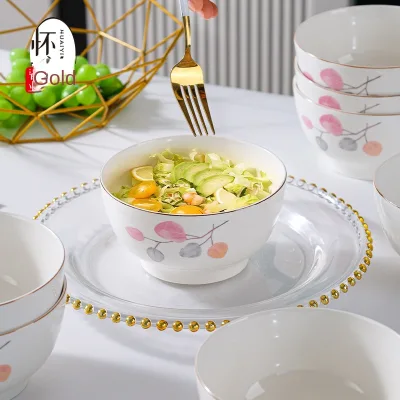
The shape of the bowl is another critical technical factor. Observed designs include "Round" and "Bowl" shapes, with some products featuring a "Solid" pattern. The "Under Glazed" technique noted in specific glass models suggests a manufacturing process that enhances durability and aesthetic appeal, potentially reducing the risk of chipping or scratching during repeated use. Furthermore, the "Style: Modern" attribute indicates a design trend that aligns with contemporary dining environments, which is relevant for buyers targeting hotels and restaurants.
Capacity is a decisive specification for rice bowls. The 1 Quart capacity observed is a standard measure for serving multiple portions or larger individual servings. However, buyers must verify the actual volume against the intended use case, as "middle" standard weights or unspecified capacities in other listings may lead to inventory mismatches. The "Standard" attribute of 550g for certain plastic models provides a baseline for weight, which is essential for calculating shipping costs and handling requirements. When sourcing, procurement teams should request detailed dimensional drawings and weight specifications for every SKU to ensure compatibility with existing dishwashing racks, storage shelving, and serving protocols.
Compliance, Certification, and Safety Verification
Navigating the certification landscape is essential for mitigating liability and ensuring product safety. The observed data highlights a robust set of certifications, including CE/EU, FDA, CIQ, LFGB, EEC, and CARB. These certifications serve as evidence that the products have undergone specific testing for food safety, chemical migration, and material integrity.
The FDA and LFGB certifications are particularly relevant for products intended for food contact, ensuring that the materials do not leach harmful substances when heated. The CE/EU and EEC marks indicate compliance with European safety standards, which is crucial for exporters targeting the European market. The CARB certification, specifically noted for certain plastic models, addresses formaldehyde emissions, a critical safety parameter for plastic products.
However, buyers must treat these certifications as product-specific attributes rather than universal guarantees. Not every listed product carries the full suite of certifications. For example, while glass models may prominently display FDA and LFGB, paper-based products might rely on different compliance frameworks. It is imperative to request valid certification documents for the specific model number being procured. The presence of a "Customer Logo Accepted" feature on paper products suggests a high degree of customization, but this does not automatically confer food safety compliance. Buyers should verify that any custom branding or printing processes do not compromise the underlying material's safety certifications.
Cost Drivers and Economic Factors
The economic landscape for microwave-safe rice bowls is influenced by material costs, customization levels, and order volume. The observed price range in the market spans from $0.01 to $30 USD, a variance that reflects the diversity in material quality, production complexity, and order quantity. Glass bowls, with their "Durable" and "Reusable" attributes, typically command higher unit prices compared to disposable plastic or paper alternatives. The "Paperbox" and "Color Box" packaging options also contribute to the final cost, with more elaborate packaging increasing the per-unit expense.
Minimum Order Quantities (MOQs) observed range from 2 to 100,000 units. This wide range allows for flexibility for both small-scale startups and large-scale distributors. However, the "Customized" attribute is a significant cost driver. Products marked as "Customized" or those accepting "Customer Logo" typically require higher MOQs and longer lead times due to the setup costs associated with mold creation or printing plate preparation. Conversely, "Non-Customized" items with standard designs like "Solid" patterns may offer lower entry costs and faster availability.
Buyers should also consider the "Industrial Use: Food" classification, which implies that the product must meet specific hygiene and durability standards that can influence pricing. The "Eco-Friendly" feature, while appealing for sustainability goals, may involve higher material costs or specialized manufacturing processes. Understanding these cost drivers allows procurement teams to balance budget constraints with quality requirements, ensuring that the selected product meets both financial and operational objectives.
Typical Applications and Usage Scenarios
The intended application of the rice bowl dictates the required performance characteristics. The observed "Recomanded Uses" include Home, Hotel, and Restaurant settings, indicating a versatile product suitable for both B2C and B2B markets. In a hotel or restaurant environment, the "Reusable" and "Durable" attributes of glass bowls are highly valued for their ability to withstand commercial dishwashing cycles and frequent handling. The "Easy to Clean" design feature further supports operational efficiency in high-volume food service settings.
For home use, the "Daily Use" occasion and "Modern" style are key selling points. Consumers in this segment often prioritize aesthetics and safety, making the "Microwave Safe" and "Oven Safe" features critical. The "Round" shape and "Solid" pattern offer a timeless look that fits various interior design styles.
In contrast, the paper-based products with "Waterproof" and "Oil-Proof" functions are ideally suited for catering events, takeout services, or temporary food service setups where disposability is preferred. The "Application: Packing Food" and "Function: Strong Sealing" attributes highlight their role in logistics and food transport. However, for microwave applications in a commercial setting, the distinction between reusable glass/plastic and disposable paper is vital. Buyers must align the product selection with the specific operational workflow to avoid performance failures.
Supplier Evaluation and Quality Control Protocols
Evaluating suppliers requires a rigorous approach to ensure consistency and reliability. The "prod_origin: China" and "Zhejiang" location data indicate that the majority of these products originate from manufacturing hubs in China. While this offers access to a vast supply chain, it necessitates thorough due diligence. Buyers should verify the supplier's ability to maintain consistent quality across different production batches, especially for customized orders.
Quality control protocols should focus on verifying the "Condition: New" status and ensuring that the "Special Feature" claims, such as "Microwave Safe," are backed by actual testing. For glass products, inspecting for "Under Glazed" integrity and checking for any surface defects is essential. For plastic items, verifying the "Eco-Friendly" claims and ensuring they meet the specified "CARB" standards is crucial.
Buyers should also assess the supplier's capacity to handle the observed MOQ ranges. A supplier capable of fulfilling orders from 2 to 100,000 units demonstrates scalability and flexibility. The "Logo: Customer Logo Accepted" feature suggests that the supplier has the infrastructure for customization, but buyers must confirm their quality control processes for printed items to ensure that the "Embossing, Glossy Lamination, Matt Lamination" processes do not introduce defects.
Long-Term Procurement Considerations
Sourcing microwave-safe rice bowls is not merely a transactional activity but a strategic decision with long-term implications. The "Disposable" versus "Non-Disposable" distinction is a primary consideration for sustainability and waste management. Reusable glass and plastic bowls, while potentially more expensive upfront, offer a lower total cost of ownership over time due to their durability and reusability. This aligns with the "Eco-Friendly" trend and can enhance a brand's corporate social responsibility profile.
However, the "Lead Time" and "MOQ" constraints must be factored into inventory planning. The wide range of MOQs allows for strategic stocking, but buyers must balance the risk of overstocking against the need for product availability. The "Standard" specifications, such as the 6x6x2.75 inches or 11.25"W x 4.5"H dimensions, should be standardized across the supply chain to simplify logistics and storage.
Finally, buyers should maintain a dynamic relationship with suppliers to stay updated on material innovations and regulatory changes. As certifications like FDA, LFGB, and CARB evolve, suppliers must adapt their production processes to maintain compliance. Regular audits and quality checks are essential to ensure that the products continue to meet the high standards required for food safety and performance in the microwave-safe rice bowl market.
FAQs
What certifications do microwave safe rice bowls typically have?
These bowls often carry FDA, LFGB, CE/EU, CIQ, and EEC certifications. Such marks verify food safety and compliance with international standards for materials like glass and plastic used in thermal applications.
Which materials are suitable for microwave safe rice bowls?
Glass and specific plastics are the primary materials for these bowls. Glass options are durable and reusable, while some plastic variants are labeled microwave safe but may also be disposable depending on the specific model.
Can I find custom logo options for these rice bowls?
Yes, customization is available for many models, including customer logo acceptance. This feature is common for paper-based products but may require higher minimum order quantities and specific printing handling techniques like lamination.
What are the standard capacity and dimensions for these bowls?
Standard capacities include 1 Quart with dimensions like 11.25 inches wide by 4.5 inches high. Other models may feature different sizes such as 6 by 6 by 2.75 inches depending on the specific product design.
How do I verify if a bowl is truly microwave safe?
Look for explicit Microwave Safe or Oven Safe attributes in the product specifications. Glass models often include these features alongside Under Glazed techniques, while plastic items require verification of their specific safety certifications.
What is the typical price range for microwave safe rice bowls?
The observed price range spans from 0.01 to 30 USD per unit. Costs vary significantly based on material type, customization levels, packaging options, and the minimum order quantity required by the supplier.
Are these bowls suitable for commercial restaurant use?
Yes, many are recommended for home, hotel, and restaurant settings. Reusable glass bowls are particularly durable for commercial dishwashing, while paper options serve well for single-use catering and food packing applications.